On 1 July, 2025, Victoria’s Local Health Service Networks (Networks) were officially established. The Networks group health services within a geographical region and are responsible for supporting collaborative care for their community, as close to home as possible. They are a key recommended pillar of reform in the Health Services Plan.
There are 12 Networks across Victoria. Each Network is responsible for:
- meeting their communities’ care needs as close to home as possible
- supporting more equitable and consistent care for patients
- increasing consistency of quality and safety of care
- strengthening workforce attraction, retention and support
- delivering support services at scale
By working together across the Network, our health services will be able to better coordinate care, including escalating your care to a larger or specialist hospital if required and bringing your care closer to home for your ongoing care and recovery.
Local Health Service Network Policy Framework
The Local Health Service Network policy framework outlines the Networks purpose and how they will operate to deliver the objectives of the Health Services Plan, including:
- Design and configuration of Networks
- Priority areas
- Collaboration arrangements
- Roles and responsibilities
- Establishment and resourcing
- Reporting and accountability
Network priority areas
All Networks are focused on the same priority areas, currently these include:
- Access, equity and flow – improving care pathways for patients, clinical service planning across Networks, developing plans for better collaboration with the wider mental health and wellbeing sector in their region, and supporting aged care patients to stay out of hospital.
- Workforce – develop Network workforce plans and share data to strengthen and sustain the health workforce through a coordinated, regional approach to planning and managing staff.
- Safety and quality – increasing safety and quality of care, by embedding whole-system continuous improvements to deliver a safer, more person-centred, and sustainable health system.
- Shared services – identifying back-office efficiencies and sharing findings with other Networks
There are no changes to any health services due to the establishment of the Networks other than officially becoming part of a Network. Each health service retains its name, local leadership, identity and connection to its community – while working together in a Network to provide greater access to services, closer to home.
Background on the Networks
In 2023, an independent Expert Advisory Committee was established to consider how to improve access and equity of our health services for all Victorians. Although we have a world-class health services system with a committed and excellent workforce, the Committee found through consultation with health service leaders that, like other health systems across the world, Victoria’s is under increasing strain and there is a need to deliver better, more connected care.
Overall, the Committee found the system was often disconnected and hard to navigate, access to services was inequitable, and resources were sometimes insufficiently focused on patient care due to duplication and administrative inefficiencies. To provide solutions, the Committee developed the Health Services Plan.
Within the Plan’s 27 recommendations was the direction to create more collaboration and connection between services by establishing Local Health Service Networks.
Final Network groupings were determined following extensive consultation with health services, guided by principles drawn from the Health Services Plan.
Network achievements
Local Health Service Network Groupings
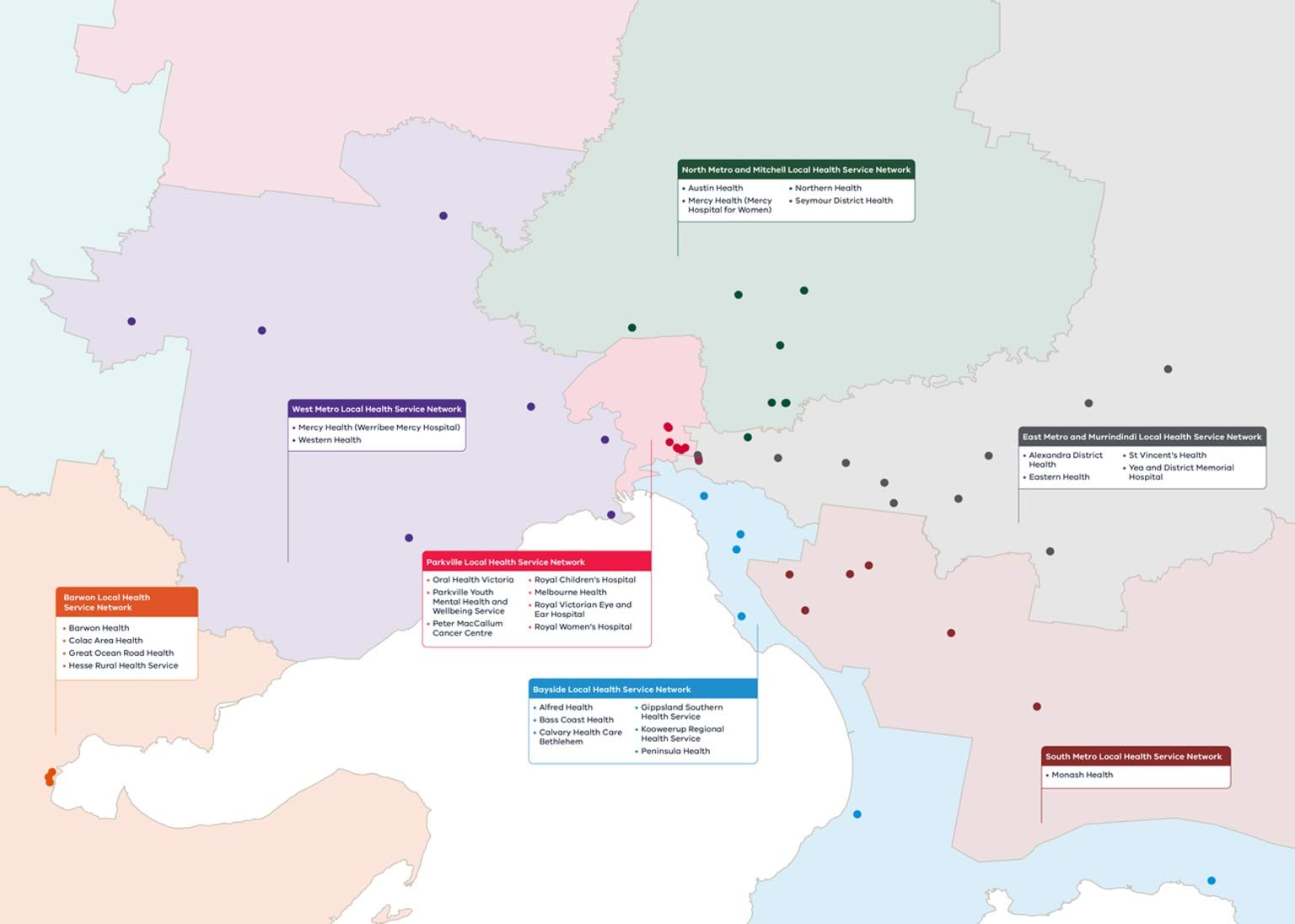
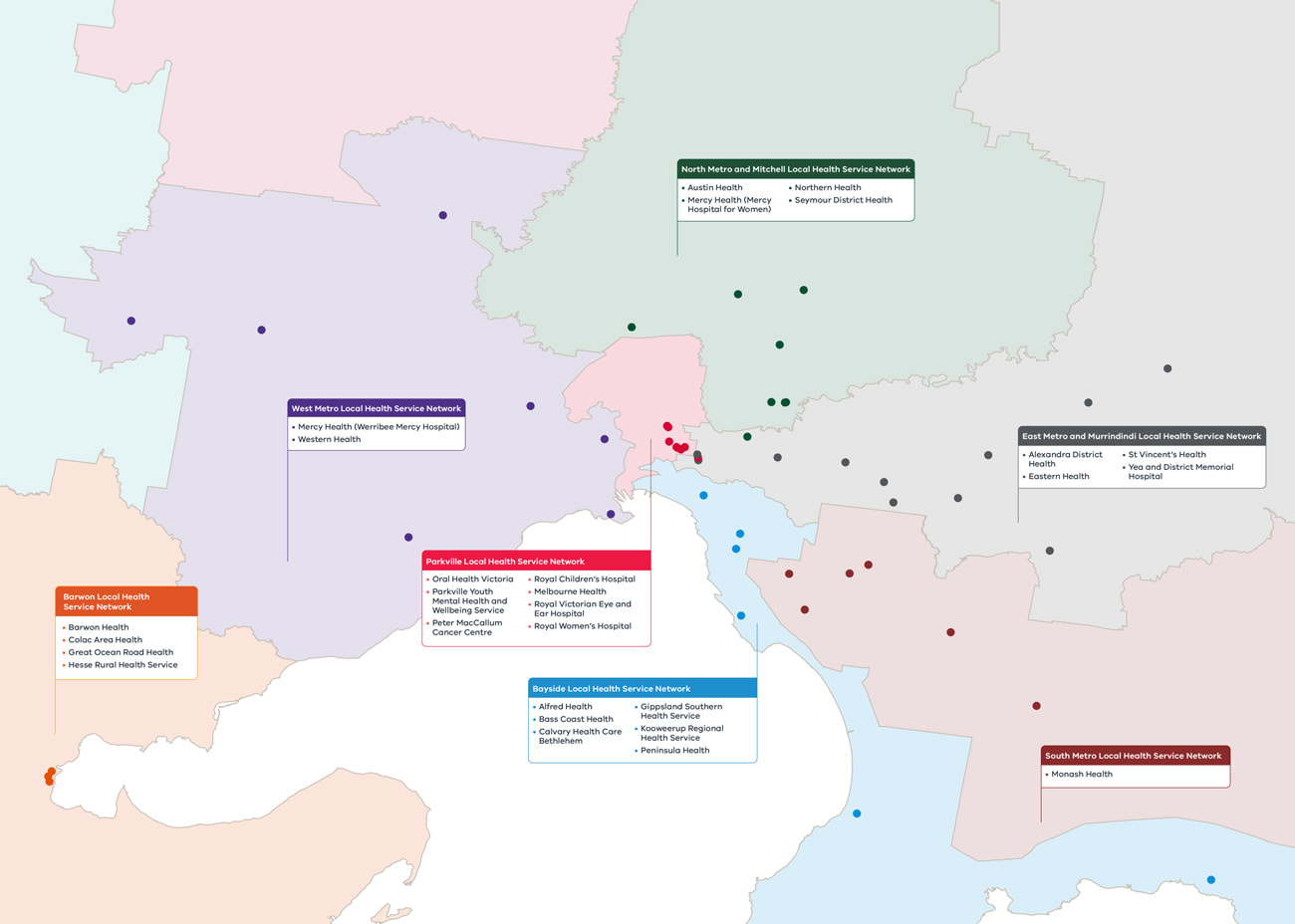
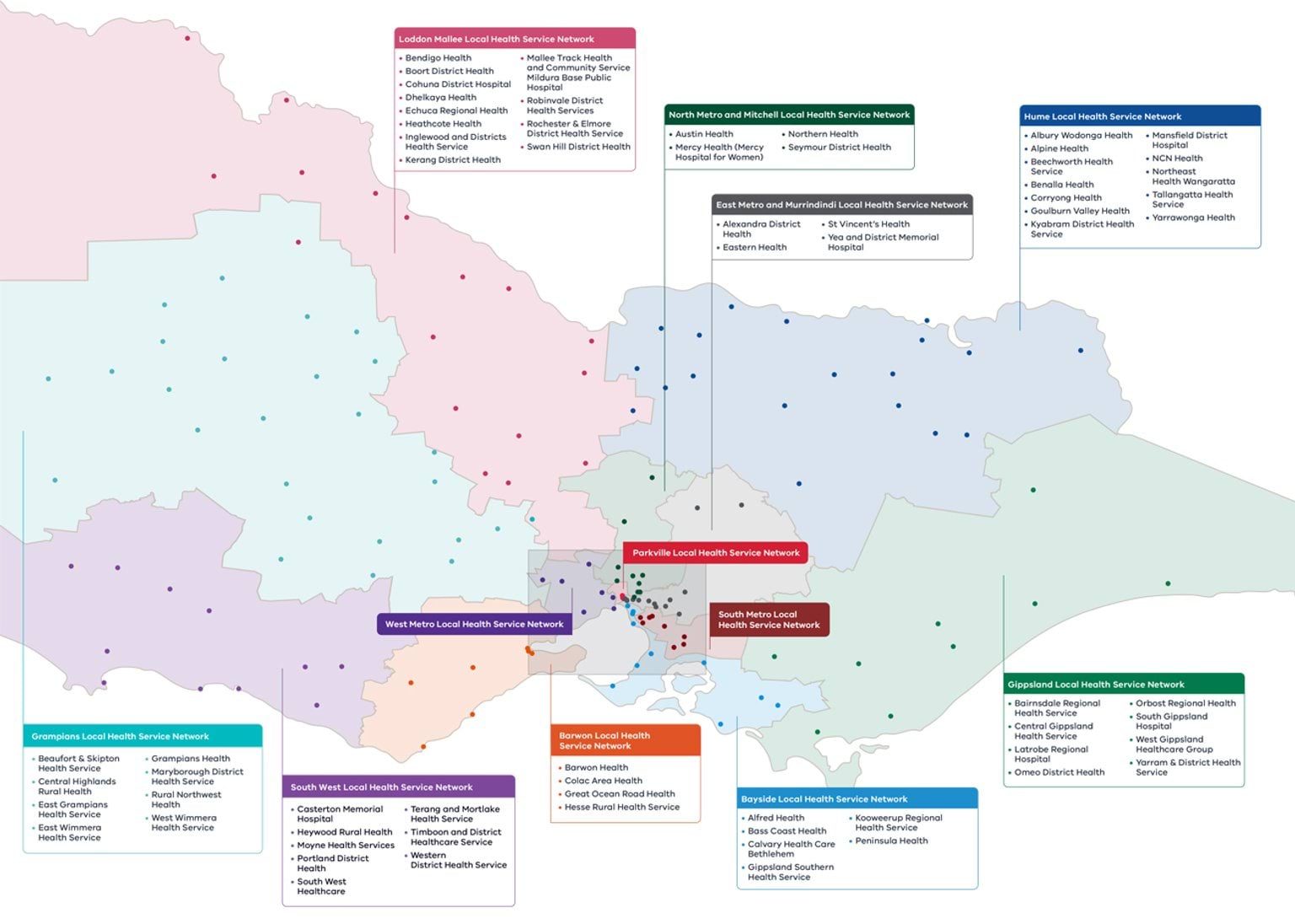
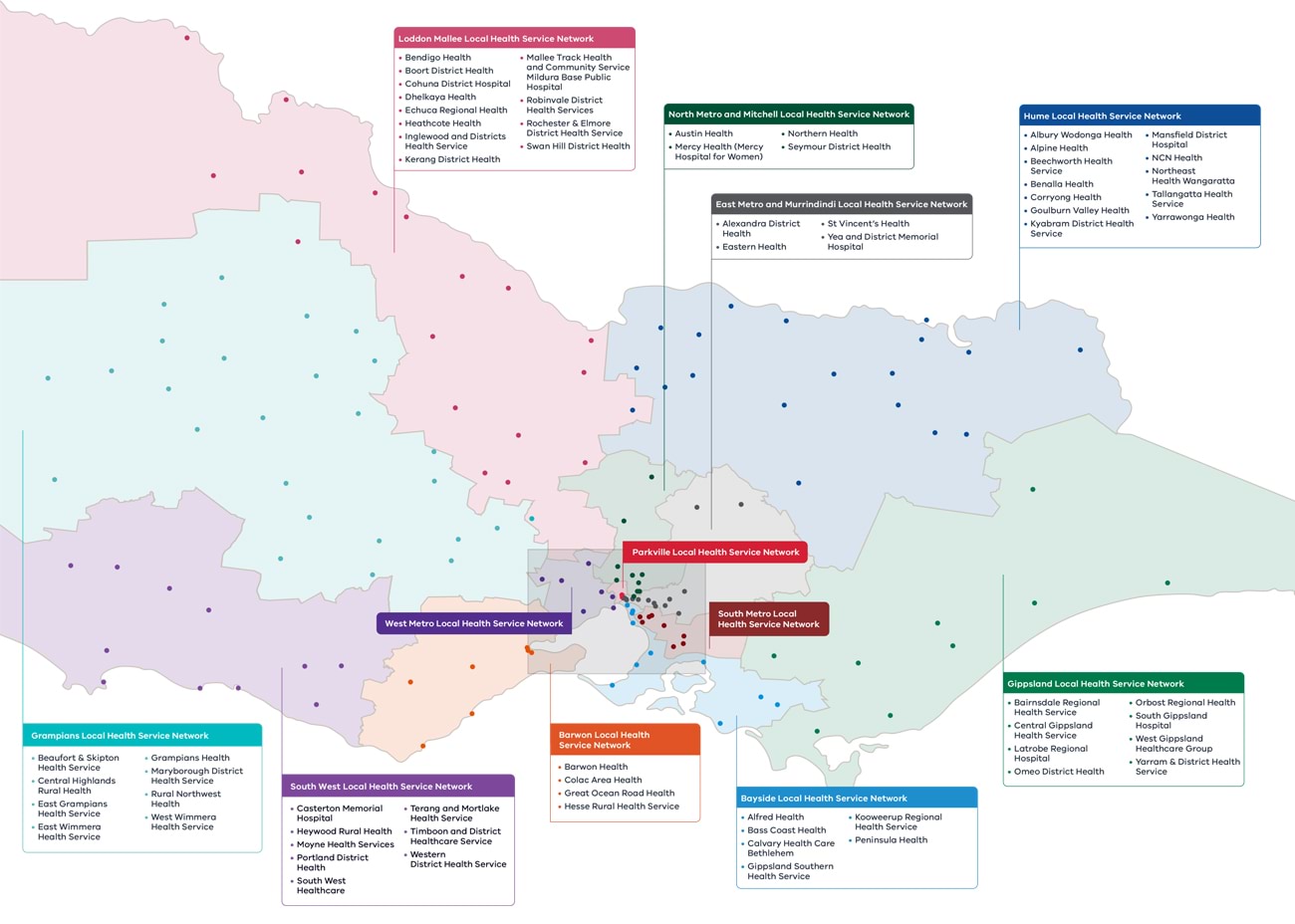
The final Network groupings were announced on Friday 10 January 2025 and can be found below. There will be 12 Networks across the state that will come into effect from July 2025.
Local Health Service Networks grouping - Metropolitan
Local Health Service Networks grouping - Regional
Updated