Key messages
- The perioperative service capability framework aims to ensure safe, high quality perioperative care occurs in the right place and at the right time.
- The framework categorises perioperative services into six levels, each building on the previous one and outlining the requirements for safe, patient-centred perioperative care at each level.
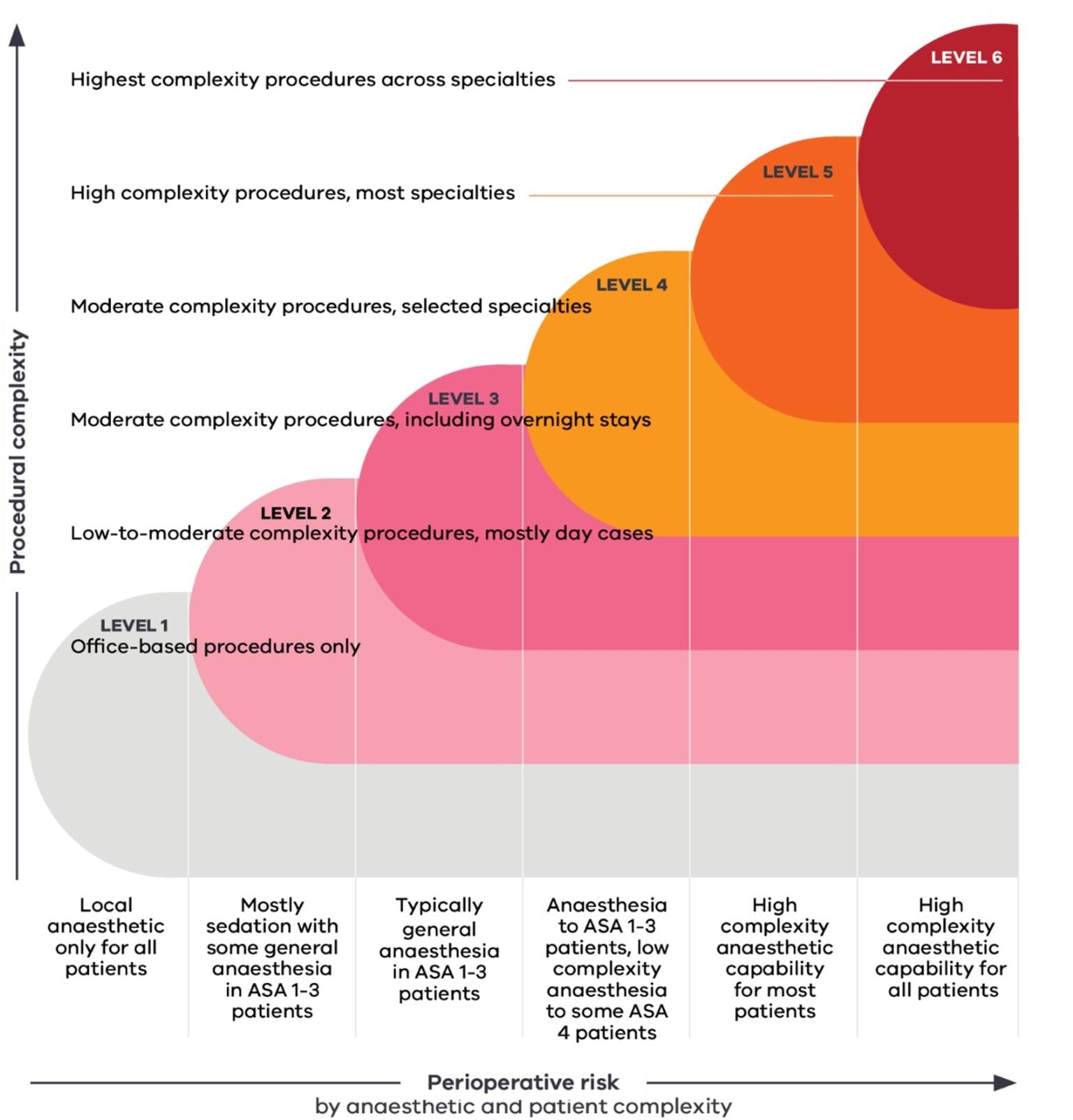
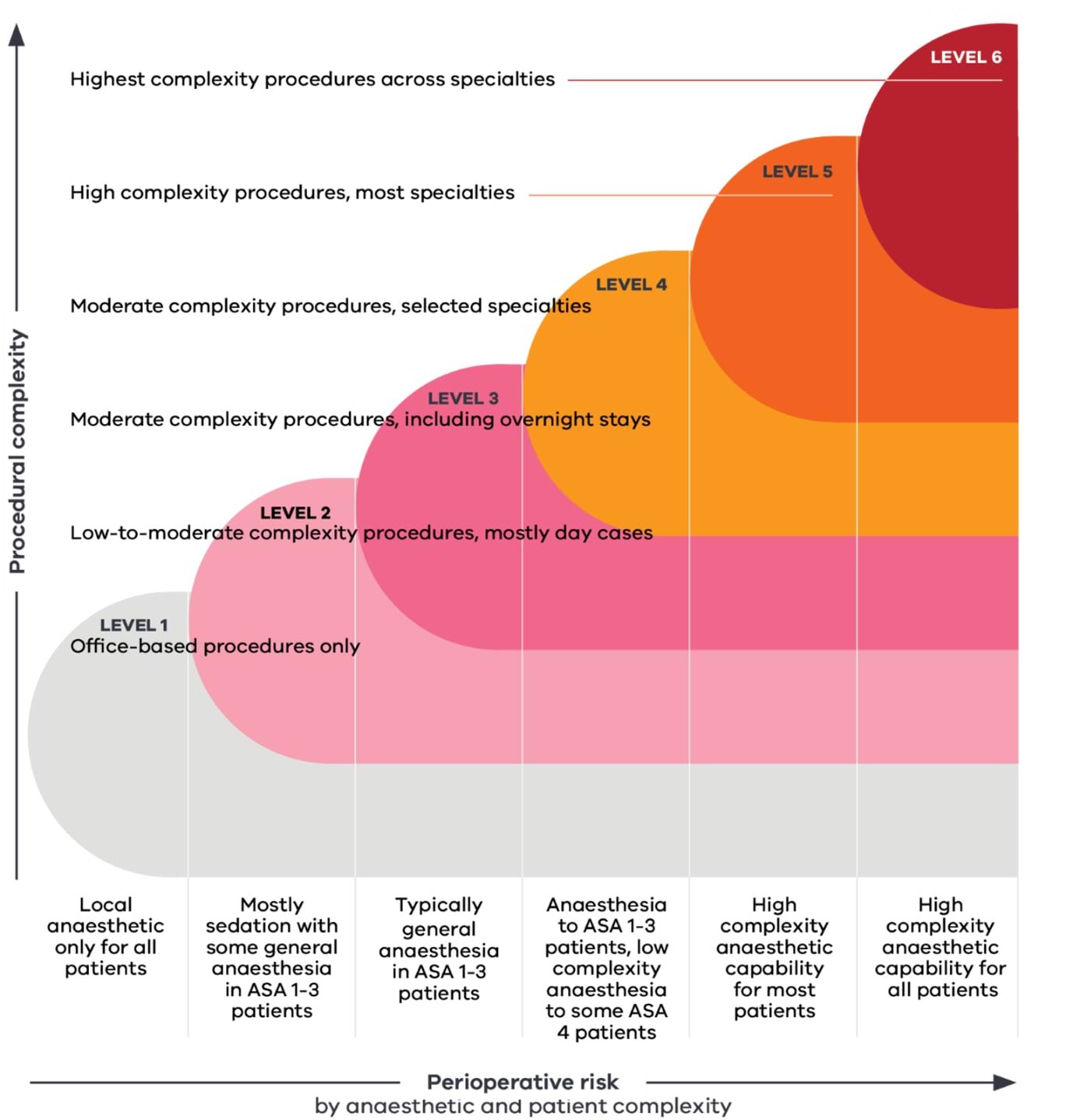
- Each Victorian health service campus has an agreed perioperative capability level based on the procedural complexity and perioperative risk (patient and anaesthetic complexity) that can be safely managed at that site.
- Each health service site has its own unique complement of services and to ensure flexibility and quality of care some health services have approved above level procedures based on the staff and care arrangements available at that site.
- The perioperative capability framework supports health services, the department and the community by defining safe perioperative services and assists planning and service development at local, regional, and state levels.
Perioperative care is the care given to patients before, during, and after a surgical procedure.
The perioperative service capability framework outlines the minimum standards for perioperative care in Victoria and recognises a range of procedural complexities and varying patient needs.
It applies to planned perioperative services delivered across Victorian health services.
The framework outlines minimum requirements for clinical workforce, infrastructure, equipment, and clinical support services across six levels of capability. The levels range from Level 1 for low complexity office-based procedures to Level 6 for the most complex procedures.
Tiered system of perioperative care
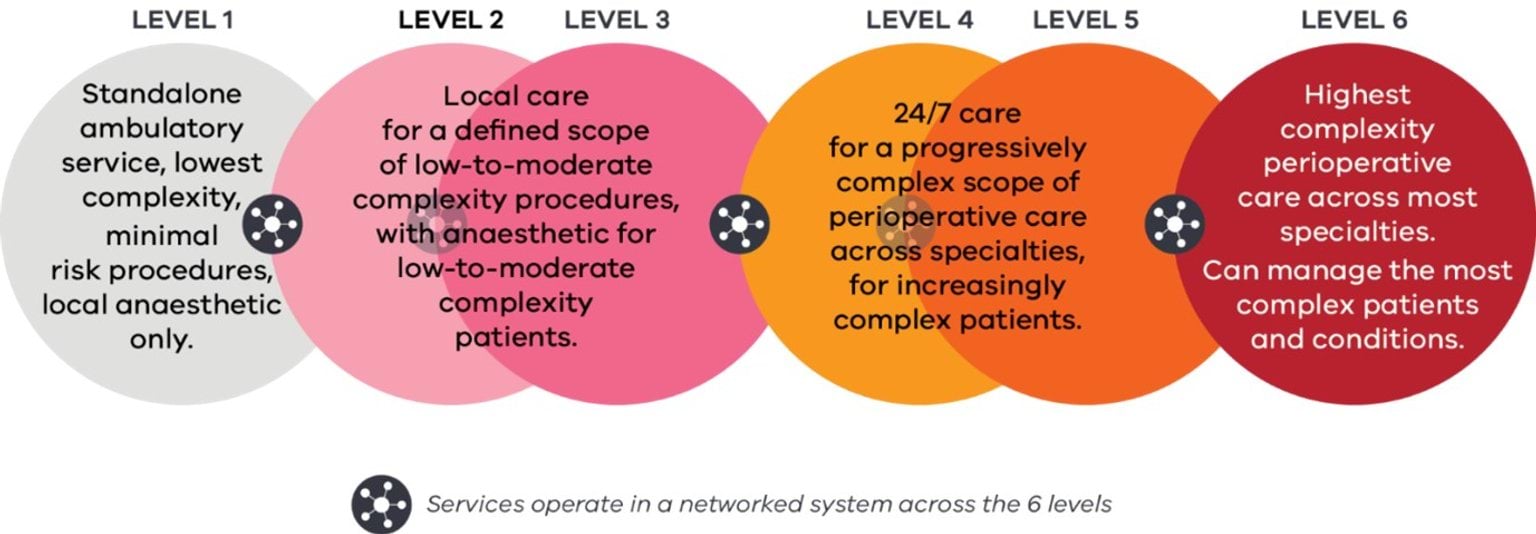
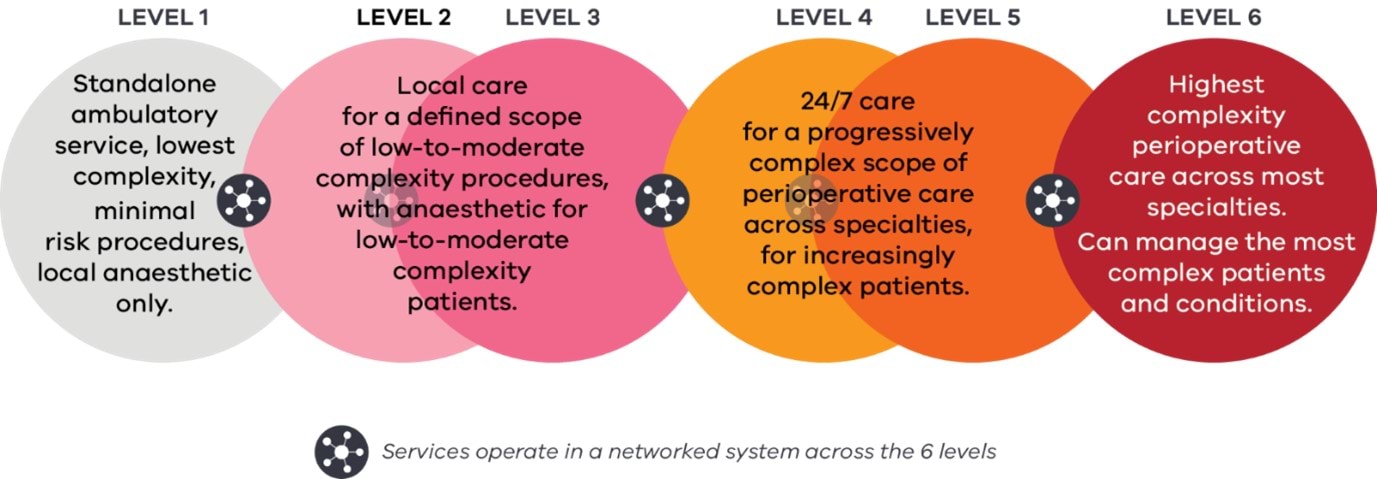
The framework emphasises the importance of integrated healthcare networks across regions and the state to meet the diverse care needs of communities.
Aims
The framework aims to:
- Ensure safe, high-quality perioperative care is delivered at the right time and right place.
- Increase the transparency of health service perioperative activity for the health services, the community and the Department of Health.
- Assist health services and the Department of Health to plan future service delivery based on community needs.
Guiding principles
The framework follows key principles, including:
- safe patient-centred care is delivered as close to home as possible
- the needs of different patient cohorts are met
- consultation, referral, and transfer processes between services of different capability are in place
- health service capabilities are clearly communicated to people accessing the service, the community and other service providers.
Using the framework
- The framework categorises perioperative services into 6 levels and outlines minimum standards for each level. This ranges from office-based procedures at level 1 offering the highest complexity services at level 6.
- The procedural complexity and perioperative risk (patient and anaesthetic complexity) that can be safely managed increases with each level, building on the capabilities of the previous one.
- Capability frameworks should be viewed in conjunction with other key documents, particularly the Health Services Plan, Victorian Role Delineation Framework, Victorian Health Services Performance Monitoring Framework, the Department of Health Policy and Funding Guidelines and the Safer Care Victoria clinical governance framework.
- Each Victorian health service campus has an agreed perioperative capability level based on the procedural complexity and perioperative risk (patient and anaesthetic complexity) that can be safely managed at that site.
- The evaluation of perioperative capability was undertaken by the Department of Health in collaboration with Safer Care Victoria and each health service.
Procedural and perioperative risk with definitions
Perioperative capability levels
Different perioperative capability levels for adult and paediatric services
The perioperative care needs for paediatric patients are different to adult patients. This is due to the different workforce and clinical requirements for these services. For this reason, health service sites have been allocated capability levels separately for both adult and paediatric patients.
Current perioperative capability levels
Perioperative capability levels have been assigned to each health service site and are outlined in the below drop-down tables. Some sites can safely and effectively deliver care that is typically provided at a higher-level service. These services have been reviewed and agreed upon by Safer Care Victoria through specific arrangements with that site. These specific sites are identified in the below drop-down tables with an asterisk (*).
Perioperative capability self-assessment and monitoring
Victoria has committed to providing transparent information to patients and communities on the capability levels of health services. To support this process, every two years, health services will complete the self-assessment.
This online tool assists health services to re-evaluate the scope of perioperative service capabilities by:
- Reviewing aspects of their perioperative care provision against the minimum criteria outlined in the framework.
- Identifying any gaps in their perioperative services and how these may be addressed to meet their anticipated perioperative service capability level.
As the system steward, the Department of Health is responsible for regular performance monitoring of public health services. The perioperative capability levels will be reviewed on a regular basis in partnership with Safer Care Victoria, as part of routine performance conversations.
Above level procedures
The perioperative capability level indicates the minimum capability level across all subspecialties/perioperative service streams that a health service site delivers.
Each health service site offers a unique set of services and some sites have the specialist clinicians, expertise and equipment to safely provide certain procedures at a higher level than their general capability level. Safer Care Victoria assesses the provision of these procedures by these sites and has approved some sites to perform certain planned surgical procedures that are above their assigned general perioperative capability level. These sites have demonstrated the ability to perform these procedures safely due to their available staff and care arrangements.
The purpose of identifying these above level procedures is to recognise the unique compliment of services available at individual sites and to support the delivery of care as close to home as can be safely delivered.
For more information on specific above-level procedures, please contact your local health service.
Inclusion of emergency surgery
Emergency (unplanned) surgery requires extra availability of staff (on-call rostering) and a workforce complement that can accommodate this. The volume of planned procedures that are delivered at a health service site can impact the availability and scope of practice of clinicians who are available to manage emergency perioperative care. Therefore, descriptors for managing emergency procedures commence at higher-level services and, where possible, patients should be transported to those services to receive appropriate care.
In exceptional circumstances, where a patient may be at risk of serious harm if urgent treatment is not provided at a given health service site, it is expected that the best available care is provided.
Surgery reform program
The perioperative service capability framework aligns with the Victorian Government's broader efforts, including the Planned Surgery Reform Blueprint, which seeks to improve planned perioperative health services by promoting greater access, safety and equitable outcomes. The framework supports the surgery reforms’ pillars of change by:
- Enhancing safe and high-quality perioperative care.
- Optimising health service efficiency with improved partnerships and system planning development.
- Strengthening system stewardship through increased transparency across the system.
If through the surgery reform program, a health service site seeks to expand its complement of perioperative services, it should consider the requirements of the framework.
Statewide designated perioperative clinical services
The scope of the perioperative capability framework does not extend to the designation of highly specialised clinical services that have been agreed at a site level for state-wide service provision. Rather, it relates to the minimum standard that is expected of all hospitals operating at a given capability level.
Downloads
Perioperative capability framework
The abridged version of the perioperative service capability framework is presented in a horizontal format to assist health services in completing section two of the self-assessment.
Indicative procedure lists
The indicative procedure list provides summary procedure examples to help inform the delivery of comparable services at each capability level. The examples given are drawn from different specialties as there is no widely accepted and validated system for classifying the complexity of surgical procedures. The list is intended as a guide only and does not replace clinical judgement.
Fact sheets for consumers and health services about the framework
Updated